New York: Skyline di geometrie e vuoti

New York: Skyline di geometrie e vuoti
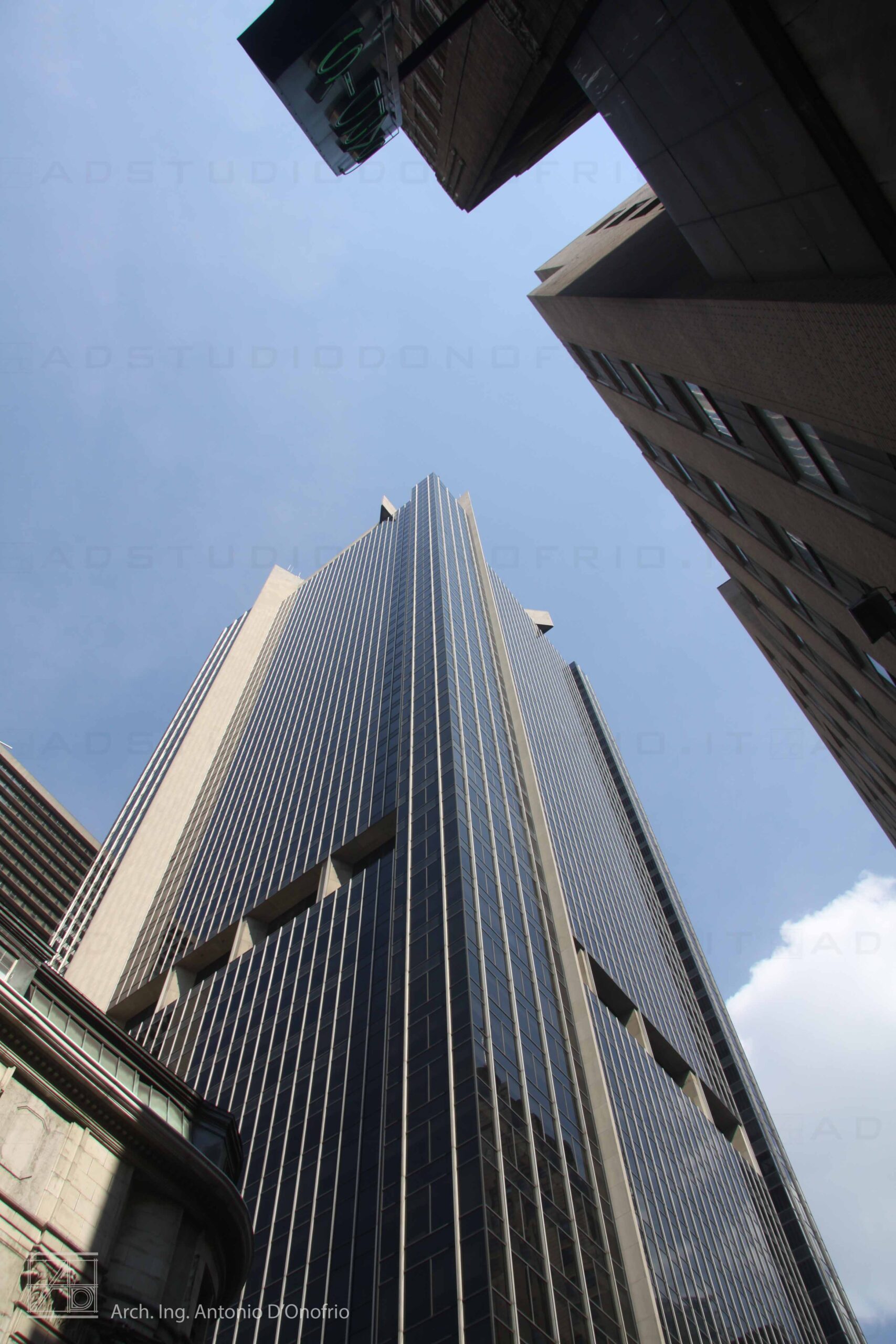
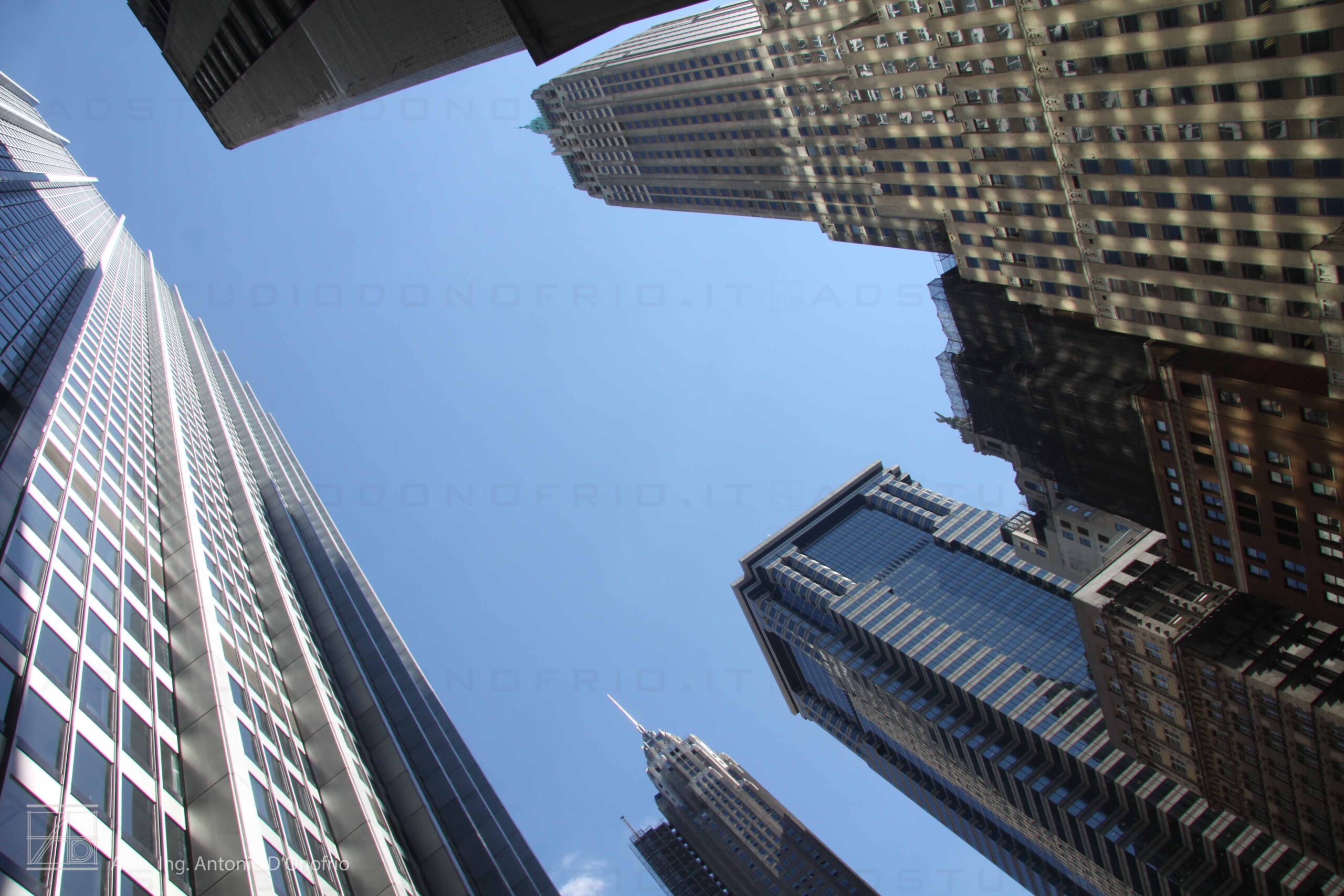
Osservare lo skyline di New York è come leggere una partitura architettonica scritta contro il cielo. I grattacieli non sono semplicemente edifici: sono segni, pause, ritmi che cambiano continuamente a seconda della luce, del punto di vista, del momento della giornata. Tra loro e il cielo si crea un dialogo fatto di incastri, silhouette, ombre nette e improvvise dissolvenze. È soprattutto al tramonto che questa relazione diventa più evidente.  Il cielo si tinge di arancio, rosa e viola, e le superfici vetrate degli edifici catturano e riflettono questi colori, moltiplicandoli. Le linee verticali dei grattacieli, così rigorose e razionali, sembrano ammorbidirsi, mentre i profili si stagliano come quinte teatrali. In quei momenti lo skyline non è più soltanto una somma di volumi, ma un disegno complesso, quasi astratto, che muta di minuto in minuto. Camminando lungo l’Hudson o osservando Manhattan da Brooklyn, lo sguardo è naturalmente attratto dagli spazi tra gli edifici. I vuoti diventano importanti quanto i pieni: fessure di cielo incorniciate dall’acciaio e dal vetro, intervalli che danno respiro alla densità urbana.
 È proprio in questi vuoti che si percepisce la forza compositiva della città, la sua capacità di trasformare la sovrapposizione estrema in un equilibrio visivo sorprendente. Eppure, per chi ha conosciuto New York prima dell’11 settembre 2001, esiste un vuoto che non è solo spaziale, ma anche emotivo. L’assenza delle Torri Gemelle si avverte con chiarezza, anche senza cercarla. Non erano soltanto due grattacieli: erano un riferimento visivo, un perno attorno al quale lo skyline del Lower Manhattan si organizzava. La loro mancanza rompe una simmetria implicita, crea una discontinuità che l’occhio coglie immediatamente.
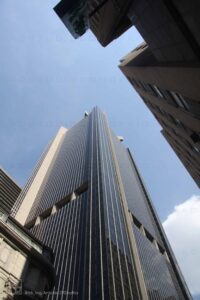 Il nuovo World Trade Center ha ridefinito quell’area con un linguaggio diverso, più rarefatto, più simbolico. Eppure il confronto con ciò che c’era prima rimane inevitabile. L’assenza delle torri non è un semplice “prima e dopo” architettonico, ma una stratificazione di memoria che si sovrappone alla città reale. È uno spazio che continua a parlare, anche nel silenzio. Come tecnico, non posso osservare lo skyline di New York senza interrogarmi sul significato profondo di queste forme. Da un lato, vedo la straordinaria capacità tecnica che ha reso possibile costruire in verticale, sfidando la gravità, il vento, i limiti strutturali.
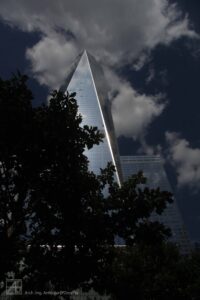 Dall’altro, percepisco quanto l’architettura non sia mai neutra: ogni edificio contribuisce a costruire un’immagine collettiva, una memoria condivisa. New York insegna che la città è un organismo in continua trasformazione, dove anche i vuoti hanno un valore progettuale e simbolico. Lo skyline non è solo ciò che si costruisce, ma anche ciò che manca, ciò che resta impresso nello sguardo e nel ricordo. Ed è forse proprio in questo equilibrio tra presenza e assenza, tra tecnica e emozione, che risiede la sua forza più autentica.
Arch. Ing. Antonio D’Onofrio
New York: Skyline of Geometry and Voids
Observing the New York skyline is like reading an architectural score written against the sky. Skyscrapers are not merely buildings: they are signs, pauses, rhythms that continuously change depending on the light, the viewpoint, the time of day. Between them and the sky, a dialogue takes shape—made of interlocking forms, silhouettes, sharp shadows, and sudden dissolves. It is at sunset that this relationship becomes most evident. The sky is tinged with orange, pink, and violet, and the glass surfaces of the buildings capture and reflect these colors, multiplying them. The vertical lines of the skyscrapers, so rigorous and rational, seem to soften, while their profiles stand out like theatrical backdrops. In those moments, the skyline is no longer merely a sum of volumes, but a complex, almost abstract drawing that changes from minute to minute. Walking along the Hudson or observing Manhattan from Brooklyn, one’s gaze is naturally drawn to the spaces between the buildings. The voids become as important as the solids: slivers of sky framed by steel and glass, intervals that allow the urban density to breathe. It is precisely in these voids that one perceives the city’s compositional strength, its ability to transform extreme overlap into a surprising visual balance. Yet for those who knew New York before September 11, 2001, there is a void that is not only spatial, but also emotional. The absence of the Twin Towers is strongly felt, even without consciously seeking it. They were not merely two skyscrapers: they were a visual reference point, a pivot around which the skyline of Lower Manhattan was organized. Their absence breaks an implicit symmetry, creating a discontinuity that the eye immediately perceives. The new World Trade Center has redefined that area with a different language—more rarefied, more symbolic. And yet, comparison with what once stood there remains inevitable. The absence of the towers is not a simple architectural “before and after,” but a layering of memory superimposed onto the real city. It is a space that continues to speak, even in silence. As an architect and engineer, I cannot observe the New York skyline without questioning the deeper meaning of these forms. On one hand, I see the extraordinary technical capacity that has made it possible to build vertically, challenging gravity, wind, and structural limits. On the other, I sense how architecture is never neutral: every building contributes to shaping a collective image, a shared memory. New York teaches us that the city is an organism in constant transformation, where even voids possess a design and symbolic value. The skyline is not only what is built, but also what is missing—what remains impressed in the eye and in memory. And it is perhaps precisely in this balance between presence and absence, between technique and emotion, that its most authentic strength resides.
Arch. Eng. Antonio D’Onofrio